





Blog
Solar Ground Screw Procurement Is Moving Beyond Unit Price
Date: 2026-05-28
In solar power plant construction, PV modules and inverters usually get most of the attention. They are easy to compare, directly linked to generation performance, and often become the focus during early project discussions. But on a real solar construction site, the foundation system is what quietly supports the whole project.
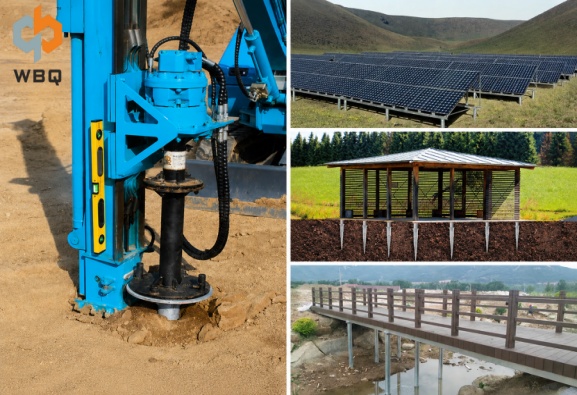
As solar farms become larger and site conditions become more complex, EPC contractors and project owners are paying closer attention to foundation work. From utility-scale solar farms in desert areas to mountain PV plants, agrivoltaic projects, and sites with soft or uneven ground, one point is clear: if the foundation is not stable, fast racking installation and high-efficiency modules cannot fix the problem later.
A solar foundation system affects installation speed, structural safety, construction rhythm, and final project delivery. That is one reason ground screw foundations are being used more widely in solar projects.
Compared with traditional concrete foundations, which usually require excavation, formwork, concrete pouring, and curing time, ground screws offer a faster and cleaner installation method. Once the pile position is confirmed, the ground screw can be mechanically driven into the soil, and the solar mounting system can be installed soon after. For projects with tight schedules, difficult site access, or changing ground conditions, this efficiency can be more valuable than saving a small amount on each pile.
From Price Comparison to Project Value
There are many ground screw suppliers in the market. For buyers who are new to this product category, the first question is often simple: “What is the price per piece?”
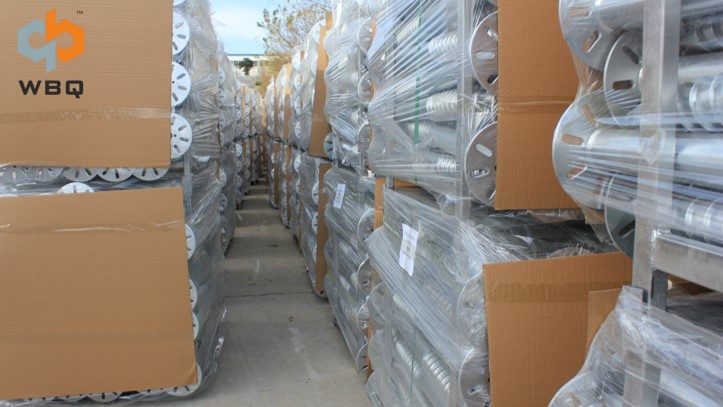
Experienced solar EPC buyers usually look at it differently. A foundation system is not just a steel product order. Two ground screws may look similar from the outside, but their performance on a real project site can be very different.
Professional buyers now pay more attention to full lifecycle value. They want to know whether the steel grade, pipe wall thickness, welding quality, and hot-dip galvanized coating can meet the project requirement. For coastal areas, saline-alkali soil, high humidity, or other corrosive environments, coating quality is not a small detail. It directly affects the long-term stability of the solar foundation system.
Batch consistency is another key point. A large solar project may require thousands or even tens of thousands of piles. If dimensions, hole positions, welding quality, or coating thickness vary from batch to batch, the problem quickly moves from the factory to the construction site. Installation slows down, labor costs increase, and the project schedule may be affected.
This is where the real difference between suppliers begins to show. The lowest quotation is not always the lowest project cost.
Engineering Support Matters on Solar Sites
For solar EPC projects, product quality is only one part of the decision. Engineering experience is just as important.
Different sites require different foundation solutions. Sandy soil, mountain slopes, soft ground, frozen soil, and coastal areas all bring different risks. A standard pile design may not be suitable for every site. EPC contractors need a supplier who can understand project conditions, recommend suitable pile types, support testing when needed, and respond quickly when technical questions appear during installation.
A reliable ground screw supplier should support the project from early technical communication to production, delivery, and on-site application. These capabilities may not always be obvious in a quotation sheet, but they often decide whether a solar project can move forward smoothly.
WBQ's Practice in Solar Foundation Supply
WBQ, Qingdao Wangbaoqiang Industry Co., Ltd., has been engaged in the research, development, and manufacturing of ground screws and related foundation products since 1999. Over the years, we have supplied foundation products for solar EPC contractors, project owners, and distributors in different markets.
For overseas EPC customers, a supplier must do more than manufacture steel products. Documentation, certification, production control, project communication, and delivery reliability all affect the final procurement result. Requirements related to CE certification, TÜV-related testing, BV inspection, and project-specific standards can influence approval, customs clearance, and site acceptance.
WBQ operates multiple production bases in China, with product lines covering ground screws, solar mounting systems, fencing systems, piling machines, and related solar farm construction products. Our factories have obtained ISO9001 and ISO14001 certifications, supporting stable production management and environmental management across the supply chain.
As one of the companies involved in China’s ground screw-related national standard work, WBQ places strong emphasis on engineering reliability, manufacturing consistency, and long-term product performance.
A Better Foundation Decision
The solar industry is moving faster. Project timelines are tighter, site conditions are more diverse, and EPC contractors are under greater pressure to control both cost and risk. In this environment, foundation construction is no longer a minor supporting part of the project. It has become a key factor in delivery efficiency and long-term plant stability.
For solar EPC projects, choosing a ground screw supplier is not only about comparing prices. It is about choosing a partner with engineering experience, stable production capacity, quality control, and long-term service support.
If you are sourcing ground screws for a solar project, or need support with solar foundation system design, customized pile solutions, or project-based technical consultation, please contact WBQ through our official website or by email.