





Blog
How to Choose a Ground Screw Supplier for Solar Projects
Date: 2026-11-10
Two ground screws may have the same diameter and length but different wall thicknesses, material specifications, or corrosion protection requirements. Quotations can also differ in the connection hardware and installation accessories included. Before comparing prices, buyers need to understand what each supplier is offering and which project conditions its recommendation is based on.
For solar EPC contractors, project managers, and procurement teams, the question is whether the proposed product, supporting documents, and delivery arrangements meet the project's design and construction requirements. The following points help make that comparison.
The project conditions behind the product recommendation
Consider two sites using the same solar mounting structure. A supplier recommends the same ground screw for both. The buyer needs to know whether that recommendation accounts for each site's soil conditions and design loads, or simply matches the mounting connection. Matching interface dimensions are a starting point; the connection detail and foundation specification still need to be assessed for each project.
WBQ's past work has included customizing ground screws to meet application-specific and design requirements, together with load analysis. The value of this experience lies in explaining why the proposed ground screw is appropriate for the project conditions described and which changes would require the recommendation to be reviewed. A product specification alone does not answer those questions.
Early discussions can begin before every detail is settled. Available geotechnical information, structural design requirements, and site restrictions provide a starting point. The supplier should explain how missing information affects its recommendation, so the buyer knows what the engineering team needs to resolve. Product advice and calculation support are separate from responsibility for foundation design. The final design should be confirmed by the party responsible for it.
Quality records that match the delivered products
When a shipment arrives, the receiving team needs to identify which drawings and inspection records apply to it. Material certificates, sample photographs, and galvanizing records serve different purposes. Drawing numbers, product codes, batch references, or another agreed method should link the documents to the products delivered.
For example, an order may contain similar-looking ground screws with different connection details. Labels showing only length and quantity can leave installers unsure which screws belong where. If drawing revisions are also unclear, purchasing and installation teams may check the same delivery against different requirements. Quality control therefore covers how drawing changes reach production, inspection, and labeling, as well as how materials, welding, and hot-dip galvanizing are controlled.
Galvanizing records need to be assessed against the applicable standard and edition, including the coating thickness requirements for the relevant items. A few isolated measurements are not enough to establish whether a batch meets the agreed coating thickness requirements, and a sample report does not automatically cover later deliveries. Technical review should also address whether the corrosion protection specification suits the site environment and project requirements. Coating thickness alone does not establish a particular service life.
What test reports and project references can demonstrate
A test report's relevance depends on the ground screw geometry, soil, installation details, and loading conditions. Results for a similar screw in different soil may provide useful background, but cannot be treated as a performance guarantee for the new site.
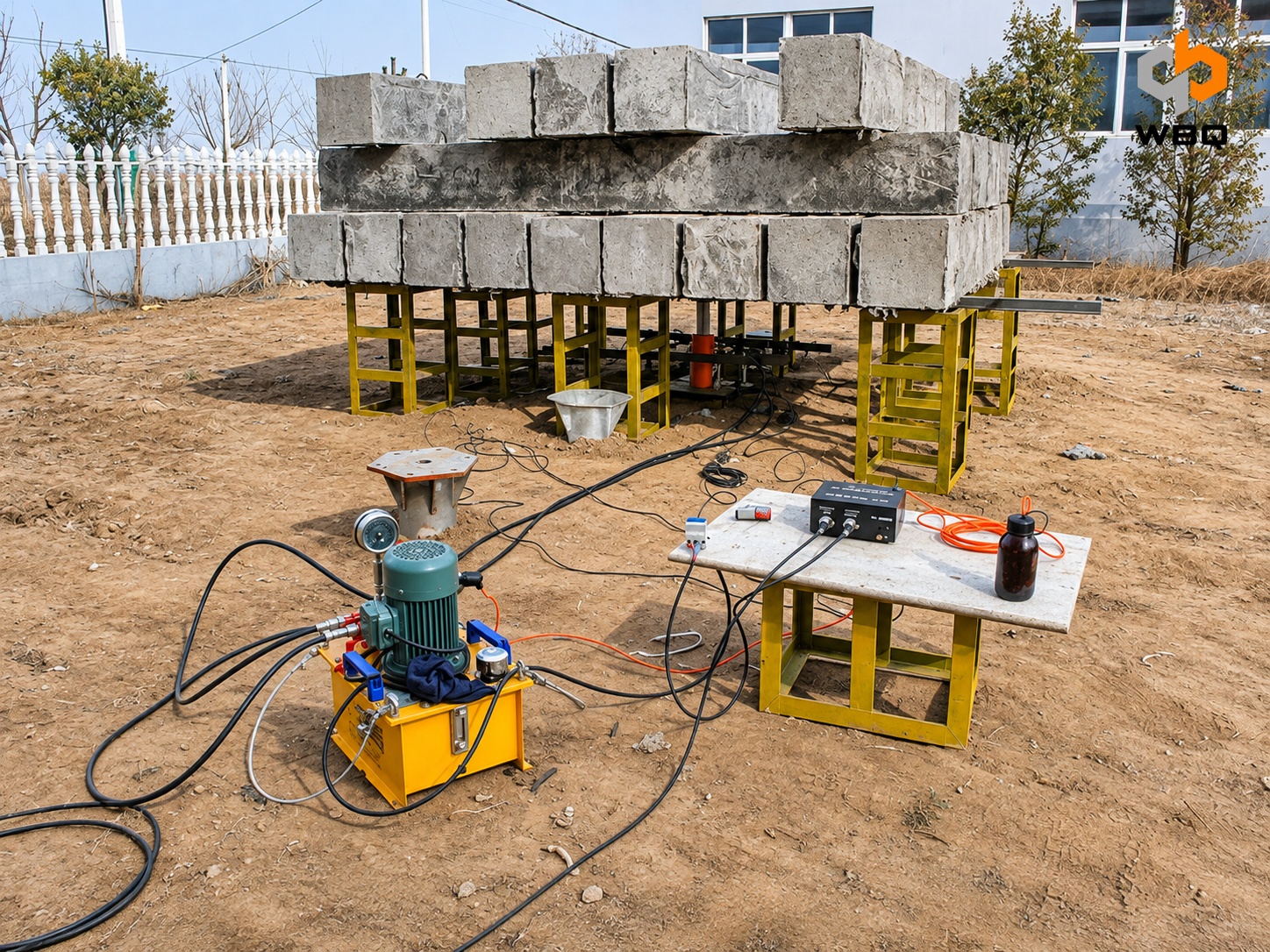
WBQ has previous experience with load and pull-out testing and with solar applications. When reviewing such experience, look for an explanation of what the results demonstrate and where further verification is needed. The corresponding report should identify the test type, loading direction, and method. This gives the buyer a basis for discussing relevance with the project engineers.
Project references are most useful when the supplier's role is clear. Supplying screws, coordinating equipment, and participating in installation involve different work. Similar connection details or installation constraints may make earlier experience relevant to the new project. Required verification remains project-specific, however. Any site testing needs agreed arrangements and acceptance criteria before it starts.
Equipment compatibility before installation
Ground screw selection and equipment planning need to proceed together. If the contractor already has installation equipment, compatibility between the drive adapter and ground screw head should be discussed before the product is finalized. Finding a mismatch after delivery can interrupt installation even when the ground screws conform to the specified drawings.
Soil conditions, working space, and site access also influence equipment choice. Diameter and length alone are insufficient to decide whether manual tools, smaller machines, or hydraulic equipment are suitable. WBQ's past work has included installation equipment of different sizes and site installation. That experience can inform discussions about equipment compatibility; equipment selection, adapters, operation, and support for the new project still need to be agreed. Installing a screw successfully does not by itself establish compliance with the foundation design and acceptance requirements.
Fence applications need their own assessment. Fence height, post connections, and installation space affect product and tooling choices. The connection details and acceptance requirements should be established for the fence project rather than copied from a solar mounting foundation.
The scope behind the quoted price
Prices become easier to compare once drawing revisions, material specifications, corrosion protection, and quantities are aligned. If one offer includes connection hardware and another covers only the ground screws, the price per screw does not reflect the same scope. Identifying those differences helps the buyer account for additional procurement and accessory costs.
Tooling and technical support also need clear terms. “Installation support” might mean remote advice or work on site; the agreement should state which services are included. Equipment purchase, rental, or use of the contractor's equipment should be addressed separately. Product literature alone does not establish what the quotation covers.
Delivery planning needs to include connection hardware and documents as well as the screws. A shipment can arrive on time while missing hardware prevents installation. For phased deliveries, agree how products will be identified, how accessories will be allocated, and when acceptance documents will be available. A clear process for drawing or quantity changes also helps the buyer assess how the proposed supply arrangements will work during the project.
To discuss ground screws and installation needs with WBQ, share your project location, application, and any available drawings or design requirements. If some details are still open, start with your project stage and the issue you need to resolve. Product requirements and the scope of supply can be clarified as the project develops.