





Blog
Ground Screw Foundations in Modern Solar EPC Construction
Date: 2026-05-09
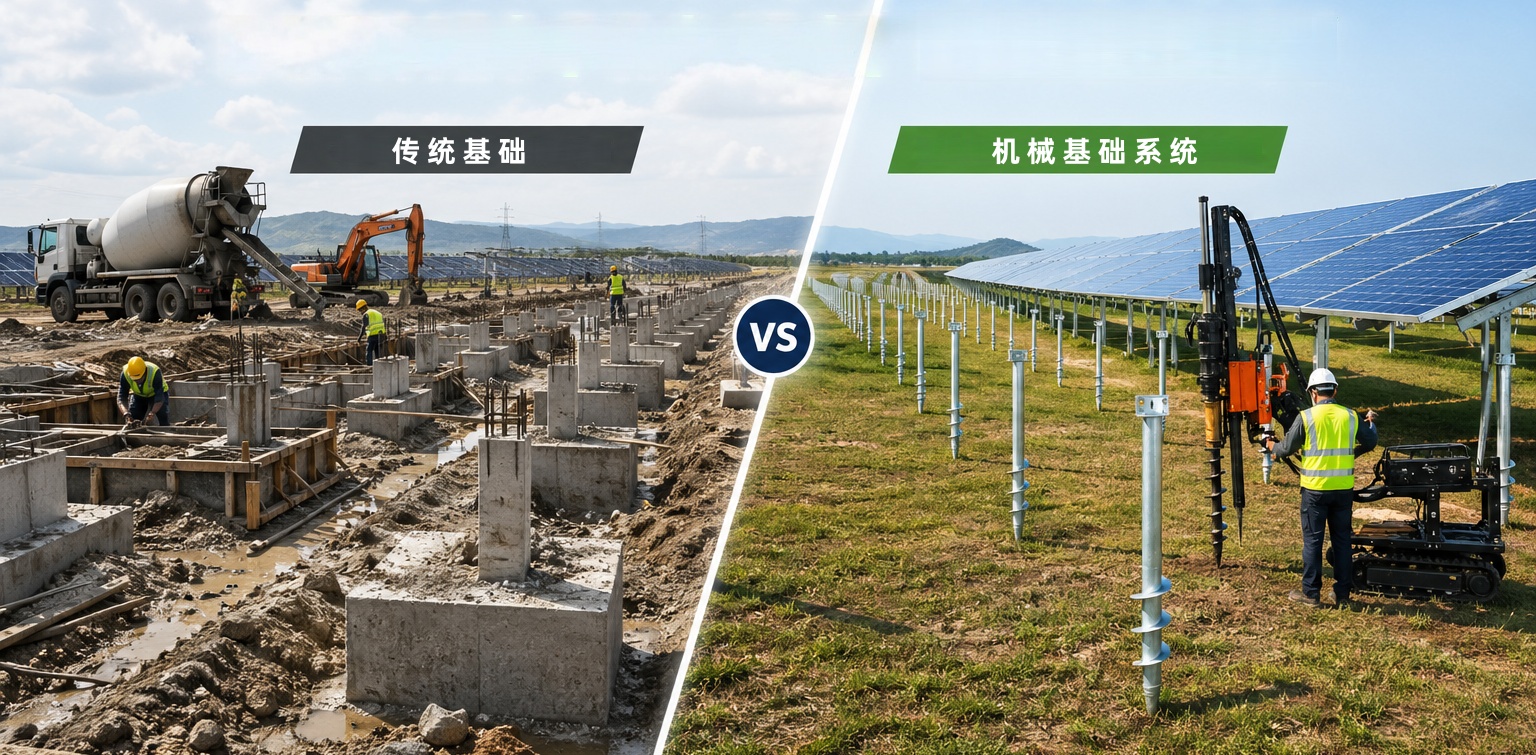
In utility-scale solar projects, foundation selection is no longer based only on structural requirements. Today, EPC contractors are also evaluating how foundation systems affect installation speed, labor coordination, site adaptability, and overall project execution efficiency. As solar projects continue to expand across different terrains and regions, traditional concrete foundations are increasingly being compared with mechanical ground screw systems — especially in projects where construction timelines and deployment flexibility are critical.
Foundation Decisions Are Becoming Construction Decisions
In earlier solar projects, concrete foundations were often considered the default solution. However, large-scale project development has changed the way EPC teams evaluate foundation systems. The discussion is no longer limited to material cost alone. Construction efficiency has become part of the engineering decision itself. Several factors are now influencing foundation selection:
● Installation speed on large sites
● Labor and equipment coordination
● Adaptability to different soil conditions
● Environmental impact during construction
● Scalability across multiple project locations
For projects operating under compressed schedules, these factors directly affect overall delivery performance.
Why Ground Screw Systems Are Gaining Attention
Mechanical ground screw foundations are increasingly being adopted in solar projects because they simplify several stages of site construction. Unlike traditional concrete foundations, the installation process typically does not require excavation, formwork, curing time, or large-volume concrete handling. Instead, the foundation is mechanically driven into the soil using hydraulic equipment, allowing structural installation to proceed much faster after foundation completion. In many utility-scale and distributed PV projects, this creates practical advantages during execution:
● Faster installation cycles
● Reduced wet construction work
● Lower dependency on curing schedules
● Less site disturbance
● Easier deployment in remote areas
For EPC contractors managing multiple project phases simultaneously, reducing construction complexity is often as important as reducing direct costs.
Site Flexibility Is Becoming More Important
Modern solar projects are no longer concentrated only in ideal construction environments. Many projects are now being developed in:
● Sloped terrain
● Rocky or mixed soil conditions
● Remote regions
● Agricultural-compatible land
● Temporary or relocatable energy applications
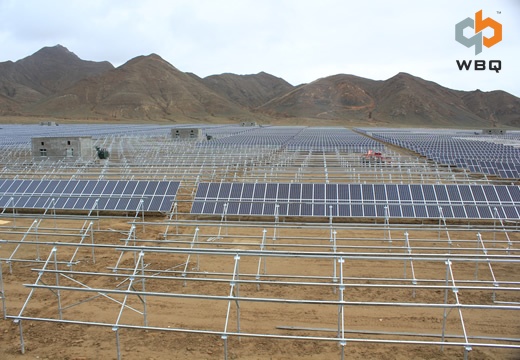
Under these conditions, construction flexibility becomes increasingly valuable. Ground screw systems allow installation teams to adapt more quickly to varying terrain conditions without requiring extensive concrete work or large-scale ground preparation.
This is one reason why many fast-deployment solar projects are evaluating mechanical foundation systems earlier during project planning stages.
Construction Efficiency Is Driving Industry Change
The transition from concrete foundations to ground screw systems is not simply a material replacement. In many cases, it reflects a broader change in construction methodology. As solar deployment continues to accelerate globally, EPC contractors are placing greater emphasis on:
● Faster site execution
● Predictable installation processes
● Reduced labor intensity
● Simplified supply coordination
● Scalable construction models
Foundation systems are increasingly expected to support these objectives rather than function only as structural components. For this reason, ground screw systems are becoming part of a wider shift toward more efficient solar project delivery.
As project schedules become tighter and construction efficiency becomes more critical, foundation systems will continue evolving alongside the solar industry itself. For many EPC contractors, the discussion is no longer “concrete or ground screw” as isolated products. In many fast-track solar projects, construction efficiency is now influencing foundation decisions earlier than ever before. And in fast-moving deployment environments, installation efficiency is becoming one of the most important engineering considerations on site.