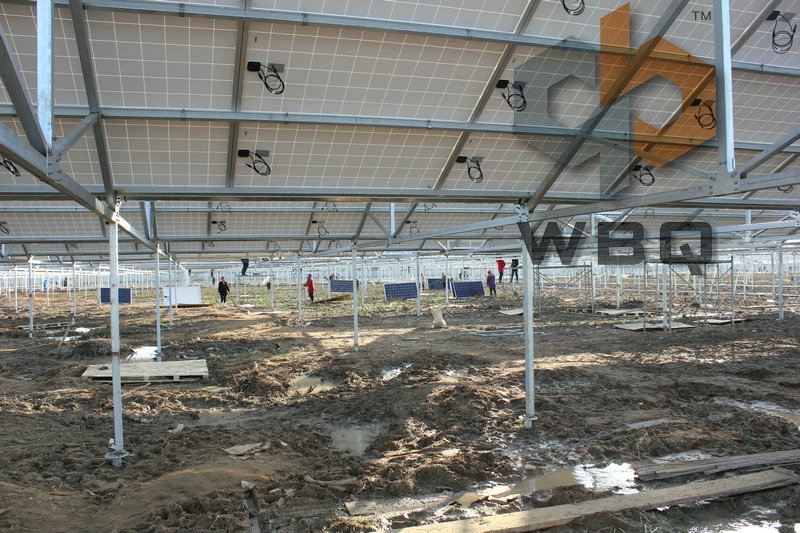
First-time users of helical screw piles often assume that “the foundation is simply about driving the pile into the ground.” In practice, the main challenge is not the pile installation itself, but aligning the racking structures and modules after installation, particularly in agricultural PV projects.
While project plans may indicate standard terrain, actual sites often present uneven surfaces, soft soils, or localized gravel layers, all of which can affect installation speed and construction rhythm. Project teams frequently report that the first several piles are installed smoothly, but as the machinery encounters more complex terrain, racking alignment slows, and repeated adjustments can delay subsequent installation.
This experience highlights why modern PV projects increasingly consider foundation selection and soil compatibility during the early planning phase—the right foundation type directly affects construction efficiency and overall project timelines.
Optimal Soil Types for Efficient Installation
Helical screw piles perform best in stable soils with minimal obstacles, including:
• Clay
• Sandy soils
• Backfill soils
• Agricultural land
• Certain desert or gravel regions
In these conditions, pile installation proceeds efficiently, allowing racking and module installation to continue without interruption. Compared with traditional concrete foundations, mechanical installation eliminates extended curing periods, enabling immediate continuation of construction and significant schedule gains.
Installation Reference Parameters (EPC Project Practices):
Note: Data are based on WBQ Series helical screw piles installed in domestic and international EPC PV projects. Actual design parameters should follow site-specific soil reports and engineering calculations.
Strategies for Challenging Soil Conditions
Sites with gravel layers, hard soils, or debris can slow down pile installation.
Recommended approaches:
• Select appropriate pile diameter or use adjustable piles
• Employ extension piles or anchoring piles where necessary
• Record installation parameters to optimize workflow
Even in moderately hard soils, properly selected piles can achieve 280–350 piles/day, ensuring schedule adherence and reducing labor and project management costs.
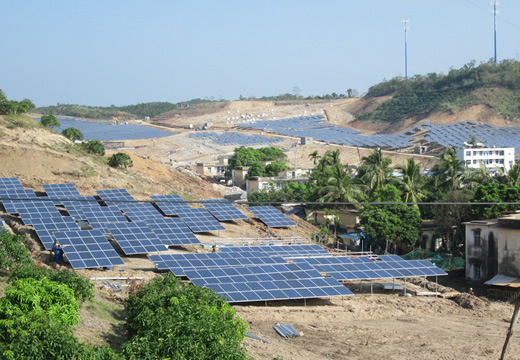
Mountainous and High-Risk Environment Installations
Increasingly, PV projects are being deployed in challenging terrains such as:
• Mountain slopes
• Steep embankments
• Desert regions
• High-wind areas
In these environments, the focus shifts from “can we install?” to long-term stability and pull-out resistance.
Installation Reference Parameters (EPC Project Practices):
Note: Data are based on WBQ Series helical screw piles installed in domestic and international EPC PV projects. Actual design parameters should follow site-specific soil reports and engineering calculations.
Construction Efficiency Insights and Professional Recommendations
• Installation efficiency is governed by soil conditions: stable soil → consistent installation pace → predictable project schedules
• Mechanical installation with flange screw piles: allows post-installation adjustments, reduces rework, and enhances continuity for large-scale PV projects
• Brand and marketing naturally integrated: WBQ Series helical screw piles have been successfully deployed in 100+ countries, certified to ISO/TÜV/CE standards. Mechanical installation can save 30–50% of construction time, reduce labor costs, and is suitable for agricultural PV, mountainous PV, slopes, and high-wind areas.