





Blog
Solar Farm Fencing Is More Than a Price per Meter
Date: 2026-08-11
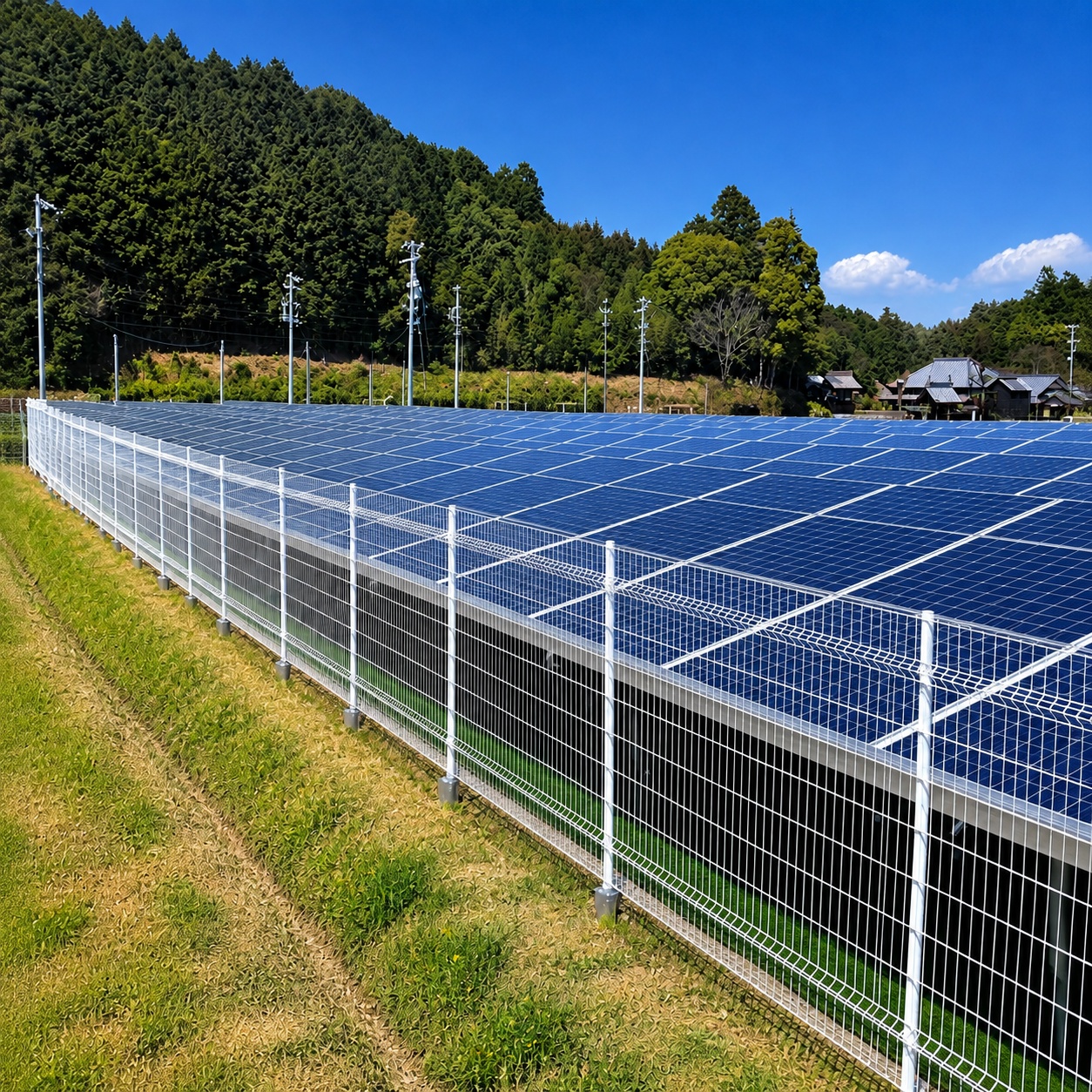
On a utility-scale solar project, perimeter fencing is often addressed after the mounting system, modules and electrical equipment. Once the site layout is largely settled, the project team measures the boundary, selects a mesh type and requests a price per meter. It may look efficient, but many of the conditions that define the fence are still unresolved.
A solar farm fence also has to work with site security, vehicle access, drainage, terrain, environmental controls and long-term maintenance. If those requirements are missing from the inquiry, quantities, gate locations and corner details often change later. Materials may even reach the site before the team has agreed how the fence will cross a steep slope, drainage channel or access road.
An accurate solar project fence quotation therefore needs more than a total length. The perimeter plan, site conditions and operating requirements must be translated into measurable quantities, system components and installation details.
The perimeter plan comes before the quantity
Fence length should be derived from an agreed perimeter layout rather than treated as the only basis for design and pricing. The first question is what the fence is intended to enclose. It may follow the property boundary, surround only the PV array, or divide the site into separately controlled areas. Substations, battery energy storage systems, construction compounds and other higher-risk zones may require separate perimeter protection.
Large sites rarely have one uninterrupted boundary. Internal sections add corners, ends and gates, affecting quantities and installation sequencing. A perimeter drawing with coordinates or reliable dimensions shows suppliers where non-standard work will occur; a single line item for the total number of meters does not.
• Fence centerline, internal security zones and any unfenced sections
• Corners, terminal points, crests, toes of slopes and road crossings
• Vehicle gates, personnel gates, temporary construction openings and final closures
• Interfaces with substations, BESS areas and other project-specific boundaries
Security requirements shape the fence configuration
A specification that says only “security fence for a solar power plant” is not enough for selection. The project may need to deter unauthorized access, livestock, wildlife or vehicles, each of which creates different design conditions. The required protection level affects fence height, mesh type, anti-climb features, top protection, locking arrangements and the treatment of higher-risk areas.
There is no universal configuration for every solar market. Local regulations, planning approvals, landowner requirements and the owner's specification may set different limits. Chain-link fencing, welded mesh and other systems suit different applications; barbed wire may be accepted on one project and restricted on another. The selected solar farm fencing system must match the rules and approval conditions for the site.
A straight line on the drawing is rarely a standard run on site
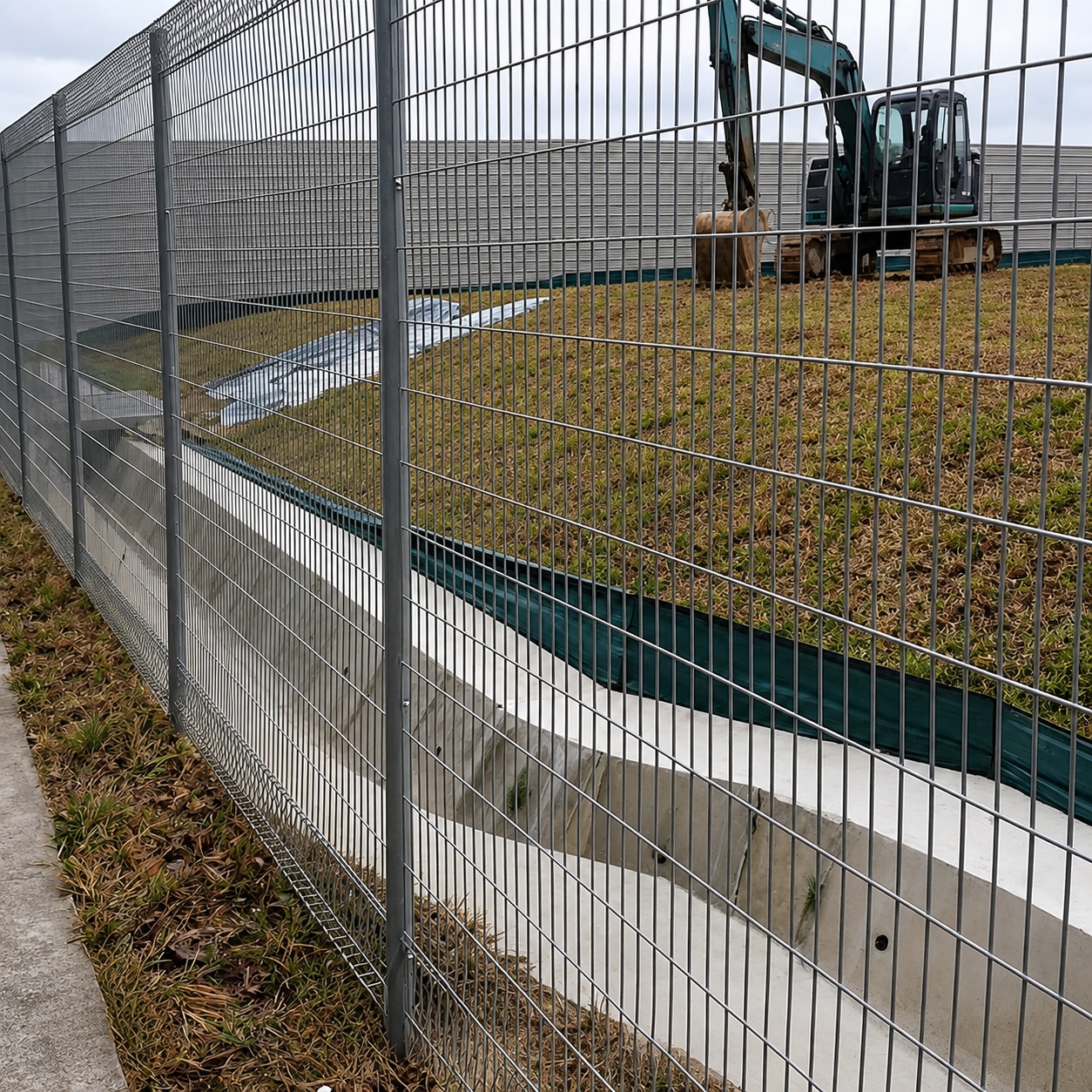
On a plan, the perimeter appears as a line. On the ground, it may cross gentle and steep slopes, drainage depressions, soft soil, rock and existing paved areas. These changes affect post spacing, panel or mesh alignment, post length, foundation design and corner reinforcement. A supplier that receives only a horizontal length cannot reliably distinguish standard runs from sections that need special treatment.
A topographic survey, representative profiles, available geotechnical information and photographs of critical locations are useful at the quotation stage. On undulating ground, the team also needs to decide whether rigid panels will be stepped, flexible mesh will follow the slope, and how bottom clearance will be controlled. Decisions left until installation often lead to cutting, extra components and avoidable site fabrication.
Roads, drainage and buried services
Fence-post foundations often compete for space with swales, culverts, cut-off drains, road turning areas and buried services. Reviewing the fence line, gates, drainage features and vehicle movements on the same site plan helps identify clashes before construction.
Posts and foundations must not obstruct drainage. Gates near access roads need enough clearance for the design vehicle to turn and the leaves to open safely. Grounding conductors, cables and other underground services also affect separation and installation sequencing. The foundation method depends on soil conditions, design loads, available equipment and local construction practice.
The fence is a complete system, not only a mesh selection
Selecting the right solar project fencing system involves more than choosing a mesh type. A workable bill of materials also covers line, corner, end and gate posts, along with braces, clamps, fasteners and any required anti-tamper details. Load paths and installation conditions vary, so one post section or connection detail may not suit every location.
The quotation, drawings and material schedule should use the same basis for:
• Overall fence height, aperture or mesh format, and wire or panel specification
• Standard post spacing and the adjustment rules for slopes, corners and terminal sections
• Post section, post length, embedment or connection to the selected foundation
• Mesh-to-post connections, resistance to loosening and anti-tamper requirements
• Reinforcement at corners, ends, gates and long straight runs
• Repair requirements where cutting, drilling or welding is permitted on site
Corrosion protection by environment and component
Coastal exposure, high humidity, saline soil, industrial pollution and temperature variation place different demands on perimeter fencing. Rather than specifying only a “galvanized fence,” procurement documents should identify the site environment, expected service conditions and applicable standards. These inputs guide the selection of hot-dip galvanizing, galvanized-and-coated finishes or another approved protection system.
Posts, fabricated steelwork, wire mesh and fasteners may use different manufacturing and coating processes, so one coating requirement should not automatically be applied to every component. ISO 1461:2022 covers batch hot-dip galvanized coatings on fabricated iron and steel articles, while other products may fall under different standards. Listing the substrate, finish, inspection basis and site-repair method by component creates a clearer specification.
Gate access has to work on site
Projects often refine fence height and mesh details while describing gates simply as “included.” Yet gate design determines whether construction, maintenance and emergency vehicles can enter without disrupting operations. Gates are also natural locations for access control, warnings and emergency information.
Gate location and clear opening should be set around the largest design vehicle and the geometry of the access road. The project can then select a double-leaf swing gate, sliding gate or personnel gate as appropriate. Gate-post foundations, locks, stops, grounding, opening direction and interfaces with monitoring or access-control equipment should appear in the same drawing set. Any signage, emergency contact details and emergency-access provisions should follow the owner's requirements and local approval conditions.
Environmental controls and long-term maintenance
A denser fence is not automatically better. Agricultural sites may need to exclude livestock, while environmentally sensitive projects may require small-animal passages, controlled bottom clearances or a particular mesh arrangement. If ecological requirements arrive after the mesh and installation height are fixed, site modifications can compromise both appearance and security.
Maintenance access also matters. Space may be needed on one or both sides for inspection and vegetation control. Corners should preserve driver visibility, and wear components should be replaceable without dismantling long runs. Input from the operations team can prevent small details from becoming recurring maintenance problems.
A quotation is only comparable when the scope is clear
The more accurately an inquiry reflects site conditions, the easier it is to compare offers on a like-for-like basis. EPC contractors, solar developers and procurement teams should provide, where available:
• A general arrangement and fence centerline showing security zones, corners and changes in level
• The security purpose, applicable regulations and the owner's technical specification
• Estimated quantities for straight runs, slopes, corners, terminal sections and special areas
• Technical requirements for mesh, posts, braces, connections and fasteners
• Gate quantities, locations, clear openings and access-control requirements
• Terrain, soil, drainage, road, buried-service and environmental information
• Corrosion protection, inspection documents, packing, transport and site-repair requirements
• Supply boundaries, installation responsibilities, drawing-approval stages and delivery lots
For WBQ quotation reviews, these inputs provide the basis for separating standard runs from slopes, corners, terminal sections and gate areas before the system configuration and quantity assumptions are finalized.
A supplier response should cover more than the price schedule. System configuration, typical details, bill of materials, finishes, quantity assumptions, packing method and exclusions all affect the commercial comparison. For international projects, drawing revisions, measurement units, standard editions and document language should be aligned before the order.
From project information to a workable fence package
The challenge in solar farm fencing is not producing an individual panel or post. It is coordinating civil, electrical, security, environmental and maintenance requirements as one system. When the boundary, ground conditions and operating needs are defined early, procurement, manufacturing and installation can work from the same basis.
At WBQ, a solar project fence is reviewed as a project-specific perimeter system, not simply as a product priced by the meter. Based on the client’s site plan and technical specification, the project team can separate standard runs from slopes, corners, terminal sections and gate areas, then set out the proposed configuration, quantity assumptions and supply boundary in the quotation.
Preparing an inquiry for a solar project fence? Send WBQ the fence centerline, gate schedule, site photographs, technical specification and required scope of supply. An early review of quantities, special sections and delivery boundaries provides a clearer basis for quotation and helps limit later additions and site adjustments.