





Blog
Technical Documents to Request Before Buying a Solar Pile Driver
Date: 2026-10-27
Consider a solar pile driver quotation accompanied by a specification sheet and equipment photographs. The model name is consistent across the documents, yet an attachment appears in the photographs without being mentioned in the offer. The listed weight does not say whether it includes that attachment.
For an EPC procurement team or foundation contractor, these are questions about the purchase itself. They affect whether offers can be compared and what equipment will arrive. Useful technical documents connect the quoted price to an identifiable configuration, its accessories, and its delivery requirements. Before ordering, the priority is to resolve the gaps between those documents.
Connect the quoted model to the offered configuration
A model name helps identify a machine, but it may leave power options, controls, and attachments unspecified. A product-series brochure can describe several available arrangements, while an individual quotation covers only one.
The quotation-specific information should make that distinction visible. It can take the form of a configuration sheet, a technical attachment, or a clearly referenced specification. The document’s title matters less than whether the buyer can tell which information applies to the offer.
Take a brochure photograph showing a drilling attachment. If the quotation describes the machine as capable of drilling, the buyer still needs to know whether the offer includes the attachment and associated components, provides only the provision for fitting them, or leaves the drilling arrangement outside the purchase. These are different supply scopes.
That distinction also keeps working methods clear. Impact driving, rotational installation of ground screws, and drilling require different equipment arrangements. A general description such as “multifunction pile driver” should be supported by an explanation of the functions included in the quoted configuration.
When reviewing a model from the WBQ pile driver range, use the product information to identify the equipment under discussion, then establish which specifications and options apply to the proposed order. If the configuration changes during negotiation, the agreed technical description should change with it.
Readers who have not yet settled on an equipment direction can refer to our article on pile driver selection for ground screw installation. Here, the question is how clearly the proposed purchase is documented.
Make the scope of supply specific enough to compare
Two offers can use similar equipment descriptions while allocating different responsibilities to the buyer. One may include the required connection accessories. Another may identify them as optional or assume they will be sourced locally.
The relevant comparison is between the packages being offered, with exclusions still visible. A statement that an attachment is compatible with a machine does not establish that it is included, nor does it identify every component needed to connect it.
This becomes particularly important when the main item is an attachment requiring a separate hydraulic host or power source. The offer should distinguish what the supplier provides from what the buyer must make available, including any connecting components within the agreed scope.
Even a listed accessory can remain ambiguous. Suppose a quotation includes one adapter for an already agreed ground screw connection. If the description says only “adapter,” the commercial line item cannot yet be matched confidently to the intended interface. An accessory reference and a suitable interface sketch or dimension record can establish which item the price covers.
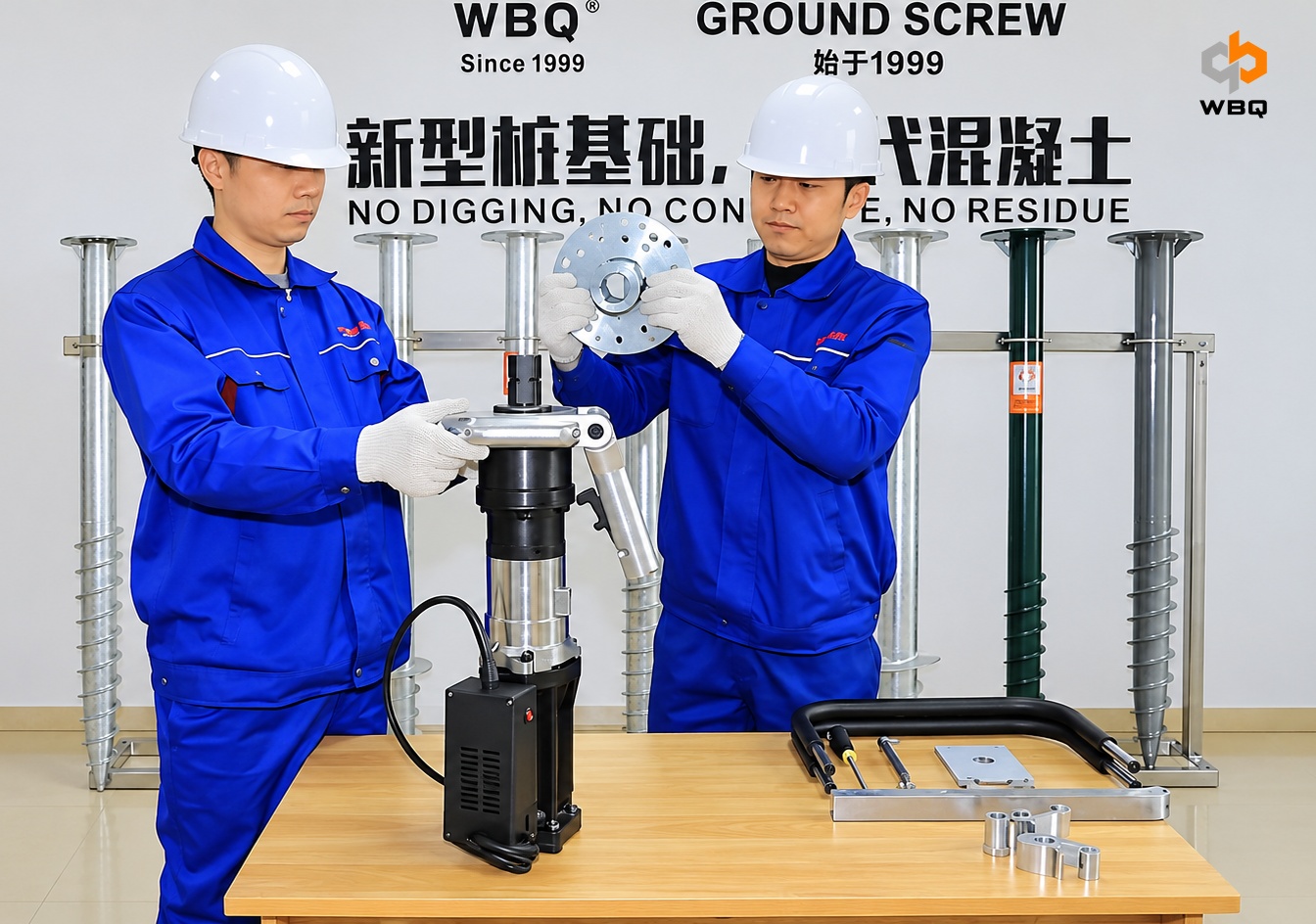
A quoted attachment should be recognizable in both the supply description and the connection information. Full manufacturing drawings are not always necessary; the information needs to be sufficient for the agreed connection to be identified.
The same reasoning applies where equipment is offered for fence-post work. An application label does not identify the supplied post connection. Keeping these details explicit allows buyers to compare prices while recognizing differences in included equipment, optional items, and customer-supplied components.
Read transport data against the proposed shipping condition
A specification sheet may correctly state operating dimensions without providing the information needed for freight planning. The procurement question is whether those figures describe the machine as it will travel.
For equipment with a mast or removable attachments, the shipping arrangement may differ substantially from the working arrangement. Transport dimensions should therefore be tied to a stated condition: what is folded, what remains fitted, and what is removed. A marked drawing or photograph can make that condition easier to understand.
Weight requires a defined scope as well. A figure may describe the operating machine, a transport assembly, or a packed unit. Those descriptions can include different accessories, fluids, and packaging. Their meaning needs to be established before they are used for delivery planning.
For example, removing an attachment may reduce the main transport unit’s dimensions while creating another unit to ship. The buyer then needs information for both units, together with an explanation of the assembly required after arrival. A smaller machine envelope does not, on its own, describe the whole shipment.
Preliminary transport data can support an early freight estimate, provided it is identified as preliminary. The final shipping information should reflect the agreed configuration and packing arrangement. Loading and unloading preparations must follow the instructions applicable to that equipment; dimensions and weight alone do not establish a handling method.
Documentation should follow the configuration into service
A machine can arrive as the agreed hardware while its documentation still describes a different arrangement. A family manual may explain the base controls, for example, while a supplied attachment requires additional operating or maintenance information.
Before ordering, establish how the operation and maintenance manual and any supplementary instructions will cover the proposed equipment. Relevant questions include the available language, delivery format, and coverage of operation, safety, routine maintenance, and supplied attachments.
The final machine-specific set may not exist during quotation review. A contents page, sample, or written description of the documentation to be supplied can still clarify the handover. Demonstration videos can help explain a function, but they do not replace the applicable instructions or necessary training.
Parts information has a related purpose: it connects a replacement request to the correct component. An illustrated spare parts list, part number, or assembly reference can help identify the item. Where equipment versions differ, machine identification details may also be needed to establish applicability.
A recommended spare part and a spare part included in the price should remain distinguishable. Likewise, a statement that technical support is available should lead to a clearer understanding of the support method and scope. Remote guidance, operator familiarization, and on-site assistance involve different arrangements and should not be assumed to form one package.
Agree now on the records that will come later
Buying-stage documents define what is to be supplied. Inspection records document checks performed on the equipment after manufacture. These serve different purposes, so they do not all need to be available at the same time.
Before ordering, agree on the required inspection records, final documentation, and delivery timing. Where a functional check is specified, identify what it will cover and how the result will be recorded. A factory check can document the functions examined; it does not establish installation output under project-site conditions. A formal factory acceptance test should be defined where required by the order.
Useful technical documents should make clear what the quoted equipment includes and how it will be delivered and supported. If you are considering a WBQ pile driver, contact WBQ to discuss the proposed configuration, any unclear supply items, and the documents your project requires. The scope and availability of those documents can then be clarified before you place an order.