





Blog
Why Installation Torque Matters in Ground Screw Installation
Date: 2026-07-28
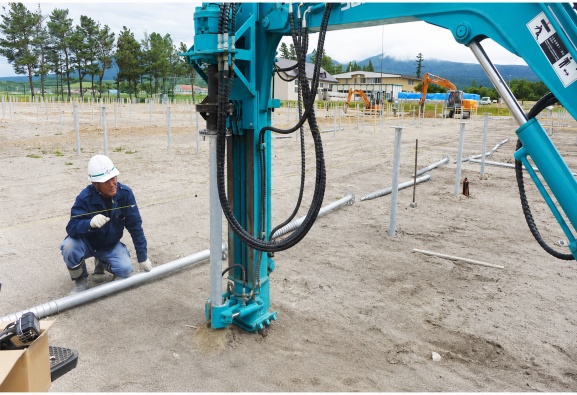
Installation torque is one of the key parameters that may be monitored during ground screw installation.
As a ground screw advances into the soil, its shaft and helical plates encounter resistance from the surrounding ground. Changes in torque can provide useful information about the installation process, including variations in soil conditions and differences between individual installation locations.
For solar mounting systems, fencing systems and other light steel structures, reaching the specified installation depth is important. However, depth alone is not enough to confirm that a foundation has been installed as intended. Pile position, verticality, top elevation, installation conditions and project requirements should be assessed together.
What Can Installation Torque Tell You?
Installation torque should not be treated as an isolated reading. Its value comes from reviewing the torque pattern alongside the installation process and conditions at nearby pile locations.
Torque data may help project teams identify:
• Variations in soil conditions across the site;
• Hard layers, gravel or possible underground obstructions;
• Changes in resistance as the ground screw advances;
• Differences between adjacent installation locations;
• Ground screws that may require additional inspection or testing.
When torque readings remain broadly consistent within the same work area, they can help the installation team understand the general ground conditions encountered during construction. If one ground screw shows a significantly different torque pattern from nearby locations, the result should be reviewed together with its position, installation depth, condition and available geotechnical information.
Torque can also be affected by the shaft and helix dimensions of the ground screw, installation depth, soil characteristics, equipment performance and operating method. A single reading therefore cannot provide a reliable assessment without considering the wider project context.
Why Installation Depth Is Not the Only Consideration
Installation depth is an important part of ground screw installation, but depth alone cannot fully describe the condition of a foundation.
Two ground screws installed to the same depth may experience different levels of soil resistance because of changes in soil density, local hard layers or underground obstructions. In other cases, a ground screw may reach the target depth after experiencing unusual resistance, deviation or repeated adjustment.
A practical site review may consider:
• Pile position and setting-out accuracy;
• Pile verticality;
• Actual installation depth;
• Ground screw top elevation;
• Torque and changes in torque during installation;
• The visible condition of the ground screw and connection components;
• Geotechnical information and project design requirements.
Installation depth indicates how far the ground screw has entered the soil. nstallation torque provides additional information about the resistance encountered during installation. These parameters describe different aspects of the work and should not be used as substitutes for one another.
For a broader post-installation checklist, see our guide: [What Should Be Checked After Ground Screw Installation?]
Can Installation Torque Directly Represent Load Capacity?
No. Installation torque should not be directly equated with the actual load capacity of a ground screw foundation.
The capacity of a ground screw foundation can be influenced by many factors, including:
• Ground screw configuration;
• Helix geometry and dimensions;
• Installation depth;
• Soil conditions;
• Installation equipment;
• Construction and installation procedures.
Torque can serve as one reference point in the assessment of foundation performance. However, a higher torque value does not automatically mean that a ground screw has a higher load capacity. Similarly, one universal torque value cannot be applied to every project as a pass-or-fail criterion.
For some engineered helical pile systems, a documented torque–capacity correlation may be used to estimate or verify axial capacity. The relevant correlation factor, calculation method and acceptance requirements must be established for the specific pile system and project conditions.
These requirements should be determined by the project designer or responsible engineer with reference to the pile type, geotechnical data, design documents and applicable field verification.
Where direct verification of foundation performance is required, the project may specify uplift, compression or lateral load testing. The appropriate testing method and acceptance criteria should be confirmed by the project engineering team.
What Information Should Be Recorded During Installation?
The format of ground screw installation records varies from project to project. The information retained should follow the project’s construction and quality-management requirements.
To support communication and traceability, torque data can be linked to the following information.
Ground Screw Location
Record the project area, ground screw reference number or position information, together with the installation date. This makes it easier to trace an individual foundation during later inspections.
Ground Screw Details
Retain the ground screw model, dimensions, production batch and relationship to the relevant design documents. This helps ensure that installation data remains connected to the corresponding product information.
Installation Details
Installation records may include the design depth, actual depth, top elevation and verticality of the ground screw.
Equipment and Installation Conditions
Record the equipment model and identification number, together with notes on unusual resistance, visible deviation, interruption or repeated adjustment during installation.
Inspection and Test Results
If the project includes load testing or other field inspections, the results should be linked to the relevant ground screw reference number, installation data and site photographs.
Connecting the ground screw location, installation depth, torque data and photographs within the same record allows the project team to review the foundation more efficiently before solar mounting installation and trace any issue that requires further attention.
Which Torque Changes May Require Further Review?
Site teams should look beyond the final torque value. The overall torque pattern should be considered in relation to the installation process and nearby ground screw locations.
The following conditions may warrant additional review.
A Sudden Change in Torque
A sudden change may be associated with local variations in soil conditions, gravel, an underground obstruction, the installation condition of the ground screw or equipment performance. The equipment status, installation records and ground screw position should be reviewed before drawing a conclusion.
Significant Differences Between Adjacent Locations
If nearby ground screws show substantially different installation data, the difference should be considered alongside the geotechnical conditions, ground screw specifications, setting-out information and equipment operation.
Unusual Installation Near the Target Depth
If a ground screw reaches the target depth but the installation process includes excessive resistance, deviation, repeated adjustment or equipment irregularities, the site record should be retained. The next action should then be confirmed in accordance with the project requirements.
Equipment Readings That Do Not Match Site Conditions
Displayed equipment data should be interpreted together with the equipment condition, operating method and actual installation process. It should not be assessed separately from what occurred on site.
These conditions do not, by themselves, prove that a ground screw is unsuitable. They are indicators for further review. The final decision should follow the project design documents, site technical requirements and the responsible engineer’s assessment.
Why Complete Installation Records Matter
The value of installation torque is not limited to monitoring equipment during construction. Its greater value comes from preserving key installation information in a clear and traceable form.
For solar foundation installation projects, complete records can help teams:
• Compare installation conditions across different areas;
• Identify ground screw locations that require additional attention;
• Coordinate the next stage of solar mounting installation;
• Improve communication between construction, engineering and procurement teams;
• Support project documentation and quality traceability.
Before construction begins, the relationship between the ground screw specifications, site conditions, foundation design and installation equipment should also be reviewed.
When procuring ground screw foundations, project teams may find it useful to confirm the key requirements discussed in our guide: [Ground Screw Foundations for Solar Projects: 6 Checks Before Procurement].
Installation torque is an important field parameter during ground screw installation, but it cannot replace installation-depth checks, geotechnical assessment or load testing. Nor should a universal torque value be used as the acceptance criterion for every project.
A reliable assessment considers installation torque together with ground screw position, verticality, installation depth, top elevation, ground screw specifications, soil conditions and project design requirements.
For EPC contractors, installers and project owners, clear and traceable installation records provide a stronger basis for coordinating solar mounting installation and managing foundation quality throughout the project.