





Blog
Pile Driver Selection for Ground Screw Installation in Solar Projects
Date: 2026-08-25
Customers selecting a pile driver for a solar project often begin by comparing maximum torque and the recommended pile size. Both specifications matter, but they do not determine equipment suitability on their own.
The ground screw dimensions, required installation depth, soil conditions, pile quantity, site access, available power source, and connection accessories all influence the selection. Equipment specifications should therefore be assessed against the actual project conditions.
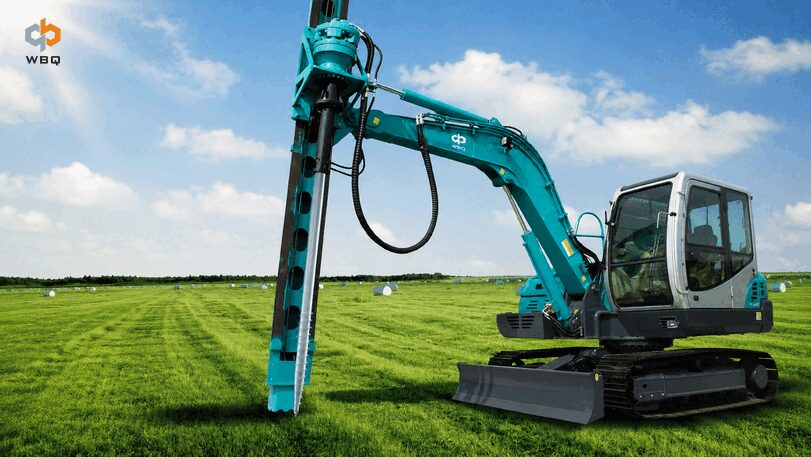
The WBQ pile driver range includes electric pile drivers, Heavy-Duty Pile Drivers, and WPD Series hydraulic power heads. Each category has different operating requirements and supporting equipment.
Start with the Ground Screw Drawing
The first step is to identify the ground screw type, shaft diameter, overall length, and required installation depth. Whenever possible, customers should provide a drawing rather than dimensions in text alone. A drawing makes it easier to identify the top connection and the required adapter.
Pile dimensions and installation depth affect the equipment requirements. Deeper installation may also require an extension shaft or a different connection arrangement.
The top structure of the ground screw needs separate attention. Two piles with similar shaft dimensions may still require different adapters if their connection details differ.
Customers who are still confirming the foundation specification can review the WBQ ground screw range. The article Ground Screw Foundations for Solar Projects: 6 Checks Before Procurement explains the main project information required before procuring ground screw foundations.
Soil Conditions Affect More Than Torque
Installation resistance can vary considerably between sites, even when the same ground screw is used. Soil density, moisture, gravel, cobbles, rock, and underground obstructions may all affect the installation process.
Maximum torque cannot be considered separately from these conditions. Difficult ground does not always call for a higher-torque machine. Depending on the site, trial installation, predrilling, different drilling tools, or an adjustment to the construction method may be necessary.
Geotechnical reports, soil descriptions, borehole records, trial installation records, photographs, and site videos can all assist with the initial assessment. If no formal geotechnical report is available, customers should provide a clear description of the soil and visible site conditions.
For more information, see Why Installation Torque Matters in Ground Screw Installation.
Consider Pile Quantity and the Construction Schedule
Once the pile and soil conditions are understood, the equipment can be considered in relation to the number of piles and the planned construction schedule.
Relevant information includes:
• Total number of ground screws
• Required daily installation quantity
• Available construction period
• Distance between work areas
• Frequency of equipment movement
Models in the WBQ electric pile driver range may be considered for smaller pile quantities and some restricted-access locations, provided their output is suitable for the pile and soil conditions.
Projects involving larger pile quantities may require equipment that can move independently between work areas. Transportation, access, operating space, and the required daily output remain part of the decision. Project size alone does not determine which equipment type should be used.
Check Access Around the Pile Positions
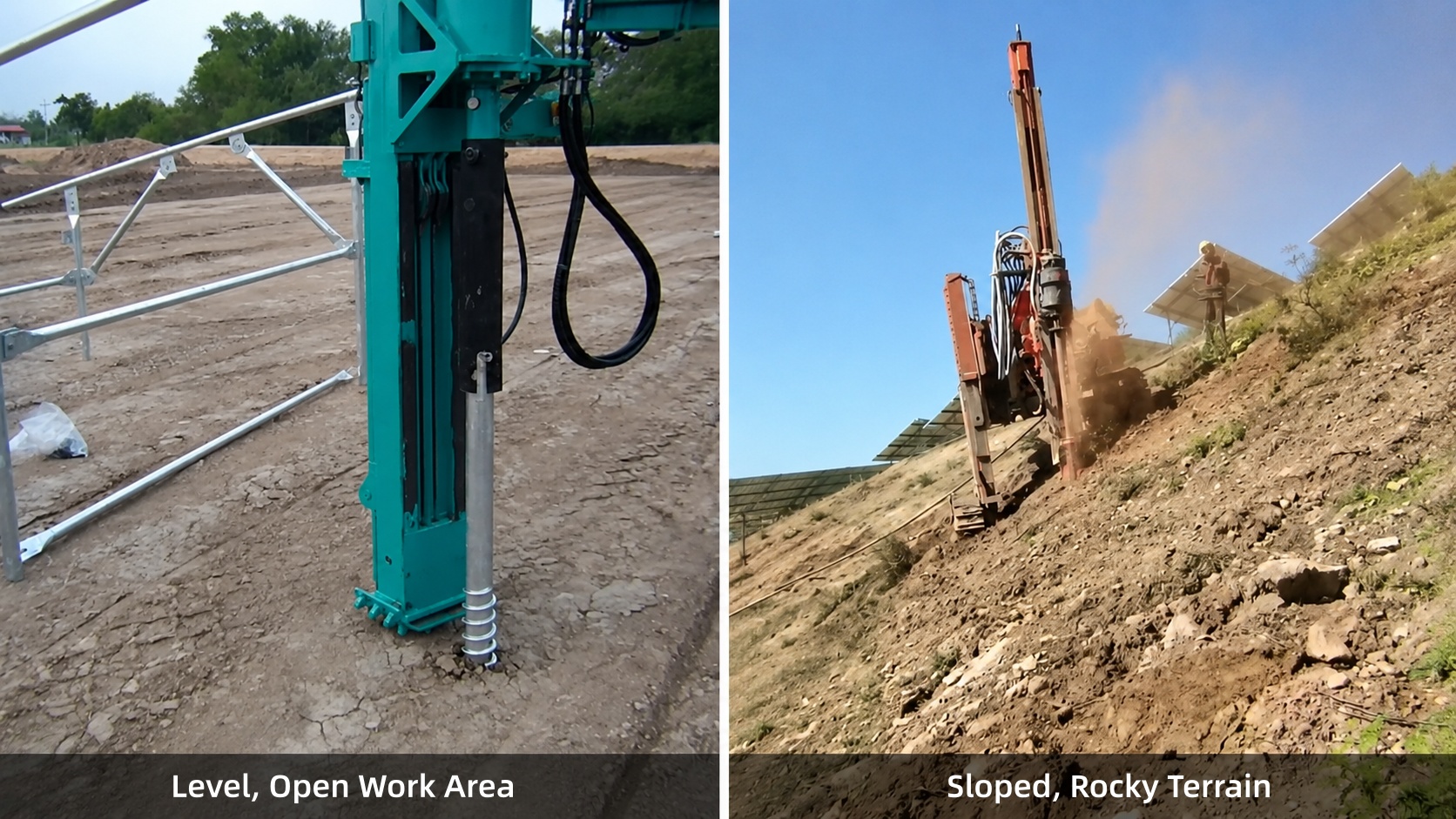
A machine may be able to enter the project site but still be unsuitable for individual pile positions. Road conditions, slopes, row spacing, surface conditions, and nearby structures may vary across the same site.
The main access information includes:
• Access-road width and surface condition
• Site slope and available working width
• Row spacing and pile spacing
• Turning and operating space
• Restrictions near water, boardwalks, buildings, or existing facilities
• Transportation requirements for the equipment
Portable electric pile drivers may suit some locations that larger machinery cannot easily reach. Their output must still match the ground screw and soil conditions.
A Heavy-Duty Pile Driver can move independently around the work area, but its transportation, access, and operating-clearance requirements need to be planned in advance.
For applicable SWDL Series models, equipment such as a mast angle indicator and ground screw guide can support alignment during installation. The available configuration depends on the final model selected for the project.
Confirm the Electrical Supply or Hydraulic Host
For an electric pile driver, customers need to provide the available voltage, frequency, and power source. Electrical requirements vary across models in the WBQ electric pile driver range, so these details form part of the model-selection process.
A Heavy-Duty Pile Driver does not depend on an excavator already being available at the project site. Transportation arrangements and operating space still need to be considered before the equipment is selected.
A WPD Series hydraulic power head operates with a compatible excavator or other hydraulic host machine. Excavator tonnage alone is not sufficient to establish compatibility. The hydraulic flow, working pressure, mounting interface, and connection conditions are equally relevant.
The main equipment categories can be viewed on the WBQ pile driver range page.
Select the Main Unit and Accessories Together
Selecting the main pile driver is only one part of the equipment configuration. The connection between the machine and the ground screw must also be established.
Adapter selection depends on the top structure and connection dimensions of the pile. Installation depth may require an extension shaft, while the equipment type and proposed construction method determine whether drive rods, anti-swing brackets, drill pipes, drill bits, or other accessories are required.
Not every project needs the full range of accessories. The required items depend on the selected equipment, ground screw structure, installation depth, and working method.
If the proposed method involves predrilling, the drilling tools and compatible equipment need to be considered separately. Comparing only the main unit or its maximum torque is not enough to determine the complete configuration.
Initial Equipment Selection Guide
| Equipment type | Initial selection direction | Main information required |
| Electric pile driver | Smaller pile quantities and some narrow, sloped, or restricted-access work areas | Ground screw specifications, installation depth, soil conditions, voltage, frequency, and power source |
| Heavy-Duty Pile Driver | Projects requiring independent equipment movement or involving larger pile quant | Output range, working stroke, soil conditions, transportation, site access, and operating space |
| WPD Series hydraulic power head | Projects using a compatible excavator or hydraulic host machine | Host-machine tonnage, hydraulic flow, working pressure, mounting interface, and connection accessories |
This table provides an initial selection direction. The final model and accessory configuration depend on the ground screw drawing, soil and site conditions, construction plan, and equipment specifications.
Information to Prepare Before an Inquiry
Customers should provide the following information where available:
• Ground screw drawing, shaft diameter, and overall length
• Required installation depth
• Geotechnical report, soil description, or trial installation record
• Total pile quantity and required daily installation quantity
• Project schedule
• Access conditions, site slope, and available working space
• Site photographs or videos
• Available voltage, frequency, and power source
• Specifications of any available excavator or hydraulic host machine
• Ground screw top connection and accessory requirements
WBQ can use these details to conduct an initial equipment and configuration assessment.
Pile driver selection is only one part of the installation process. Pile position, alignment, installation depth, and other project requirements also need to be checked after installation. See What Should Be Checked After Ground Screw Installation? for further information.
Customers can contact WBQ with their project details to discuss a suitable equipment type and configuration.